Pages

Wednesday, May 14, 2008

Facing the enemy's deceits

Enemies are real. They don't only show up in fictional cartoons, movies, or books. They are real, even though sometimes we don't know who or where they are. It can be the most unexpected person. It can even be your co-worker trying to make his/her way to the top (and thinks that you are an obstacle).

Well, I believe that no matter how good a person we are, we are bound to make enemies in some point of our lives. The Qur'an also informs us that even the prophets of monotheism had their enemies. Yusuf (Joseph) a.s. had to face his jealous brothers and the deceits of his master's wife (when he was a slave), Moses a.s. had to face the not mighty pharaoh, Isa (Jesus) a.s. had to face the Jewish rulers and priests, and Muhammad s.a.w. had to face the Quraish leaders (and even now after his death he still has to face many forms of enemies).

One of the assault weapons that people use nowadays are lies and deceits. The war happens in the media. The art on how to create and direct opinions of the public. The prophet Muhammad (and Islam literally) has recently been battered by several media games (the cartoons by jylland-posten in the name of free speech, the "fitna" movie by Geert Wilders, and other forms of mockery), which was responded inelegantly by most of the Islamic community by doing disrespectful actions (by burning flags, vandalism, etc).

I know everyone is upset and angry, but how should we respond?

According to surah Al An'aam (112), insults, mockery, lies towards Islam is by Allah's will.

Here's the 'aayah:
وَكَذَلِكَ جَعَلْنَا لِكُلِّ نِبِيٍّ عَدُوًّا شَيَاطِينَ الإِنسِ وَالْجِنِّ يُوحِي بَعْضُهُمْ إِلَى بَعْضٍ زُخْرُفَ الْقَوْلِ غُرُورًا وَلَوْ شَاء رَبُّكَ مَا فَعَلُوهُ فَذَرْهُمْ وَمَا يَفْتَرُونَ

The approximate meaning is:
And thus it is that against every prophet We have set up as enemies the evil forces from among humans as well as from among invisible beings that whisper unto one another glittering half-truths meant to delude the mind. But they could not do this unless thy Sustainer had so willed: stand, therefore, aloof from them and from all their false imagery!

He, The Almighty has promised it in the Qur'an, and has also given us instruction on what to do. The best respond is to not make it a big deal. We should counter it by straightening the misunderstanding, say that it's wrong, and just move on and continue being good muslims. If we get eaten up with the issue and overreact, we have successfully fallen into their trap...

May we all be given the power to stay poised and patient in facing all our enemies...

Keywords: Muhammad Mohammed Mohamed Cartoon Danish Newspaper Quran Terrorism Islam al an'aam al anaam 112

Monday, May 05, 2008

Our insignificant knowledge

Human beings are curious creatures. We try our best to understand what we don't understand, and do a pretty good job in doing so. We've came a long way since the beginning of history. From only knowing how to use modified rocks, to being able to understand and utilize complex matters such as chemical compounds, microbes, genes, and nano-materials. Without doubt, science plays a very strong part in our current way of life. As through it we are able to enjoy the luxury of the things we currently enjoy, such as electricity, internet, soap, and gazillions of others that are too much to mention.

Humans were destined to be great. We are the only creatures that can build and use our knowledge for our benefits. It gives us the potency to be most noble among all of God's creatures. There are thousands of scientific papers and articles that report new findings at a daily basis (which also shows that there is still much to learn). However, our overwhelming knowledge can be too much to handle sometimes. As it can often make us over confident and even worse, arrogant. It makes us think that we can control and solve EVERYTHING. Acting as god... We tend to be ignorant that all the knowledge that humanity has gained, is actually insignificant to what is NOT known... Like a drop of water in the big blue ocean.

One of the ultimate questions that is yet to be solved by science is the mystery of life and death. Nobody can predict when someone is going to die, how the process is, and so on. And nobody can predict the exact time a baby will be born. The matter is beyond our knowledge and science, and I believe that it is a secret that only God knows. Besides life and death, there are many questions that humanity is still baffled about. The entity of time, the magnitude of the universe, the work of the brain, are just several among the unsolved questions we have.

Furthermore, our knowledge is also prone to mistakes. An article in newscientist published in 2005 describes that most reports in scientific papers are wrong. Claiming that there is less than a 50% chance that the results of any randomly chosen scientific paper are true (it probably also applies for the article itself). Which is astonishing, as the scientific community and the papers they publish represent the front liners of scientific development, and science itself.

The wrap up is that our science and knowledge is limited, insignificant, and prone to mistakes. So we should stop being arrogant, and accept that we have our limits (but it doesn't mean we can stop learning! Just stop being arrogant). So how insignificant is our knowledge anyway? I believe that it is so insignificant that there will always be something new to discover until the end of time.

May we all be given the heart to stay down to earth no matter how much we know...

Thursday, May 01, 2008

Thinking about the choices we make

Whether we realize it or not, we are faced with options everyday.

We choose whether to take the bus or the train, to wake up early or late, to eat in or eat out, etc. The examples above are relatively easy to choices to make.

However, there are also times when we are faced with difficult ones, choices that will alter our way of life, such as when we are faced to choose a career, choose a partner in life (husband or wife), choose to have children or not, choose to do good or bad, choose a religion, etc. Even though we have made extensive research, there is still a large possibility that we become unsatisfied with the choices we make, and think that we've taken the wrong options.

So how do we know that we've made the right choices or not? Well, at the time we take the choice, we don't know for sure. All we can do is have confidence (hey, we've done our research right?), take the consequences and what is equally important, is to pray that our choices are correct and that whatever happens is for the best.

The maze of choices in life

Our life is like a maze with many right paths. Each choice we make contributes towards where we end up. But we have to beware that there are also dead ends. So pay attention to the clues and signs that might randomly show up. As in a maze, we can sometimes get lost in this world with all its offerings and glitters, which we should be aware of. For Muslims, we are lucky to be obliged to pray and be reminded for at least 17 times every day in our prayers to stay in the right path, "shiraathal ladziina an'amta 'alaihim", at least to protect our awareness.

May we all be guided on the path of righteousness, and be blessed with whatever choices we make in life.

Wednesday, April 23, 2008

Being grateful

I bet that everyone wants better things from what they have. Better earnings, better looks, better career, better computer, better car, better brain, better this, better that, better life...

Well let me tell you that it's perfectly human. One would always want better things from what one has. I guess we humans are cursed (and blessed) with this trait. It makes us progressive beings, who always seek for what is best.

Unfortunately, there are times when this trait makes us envious towards what other people have. And in turn make us ungrateful for what we ALREADY have. I know the feeling because I often experience it. If it gets too chronic and gets a hold on me, I become unfocused and spend a lot of energy on it (being envious and daydreaming takes quite an amount of energy you know...).

Anyway, the cure for envy is to be grateful for what we have. We often forget that the small details that God has given us are actually BIG blessings. The fact that we still have perfectly functional eyes to read this post is one of them. Having perfect hands to type with, having the luxury of internet connection, having the money to eat properly 3 times a day (sometimes more), being able to breath and all the little things that somehow slip our mind are all BIG blessings.

Being able to witness God's marvels are only one of the many blessings He has given us

Rather than looking up, try to look down to others that aren't as lucky as us. Say Alhamdulillahirabbil 'alamiin. "Praise be to Allah the lord of the worlds." And pledge ourselves to help those who are less lucky than us.

I hope we can all be grateful for the blessings that are given to us, and have tranquility in our hearts.

Wednesday, April 16, 2008

Our motives

Everything we do must have a reason, a motive behind it.

Our typical modern lives force our motivation to be dedicated to our family, career, money, hobby, lust, etc. And it is very difficult to create balance between them (for me anyway). There are also times where we get torn between our priorities, get obsessed into something and end up making a decision we regret. Furthermore, there might also be people who neglect common sense in order to pursue their ambition or motive, in the cost of other people.

In Islam, we are ordered to say Bismillahirahmaanirrahiim whenever we want to do anything. It is the opening verse of the Qur'an, which has meaning: "by the name of Allah, Most Gracious, Most Merciful". By saying this, we pledge ourselves in Allah's path, and all other motives blend and harmonize with it. We are ordered to do our best to become blessing for the universe, and to be beneficial for other people. It is supposed to create balance in our lives, and in turn make us better and happier people.

Nowadays, a lot of Muslims do not realize the philosophy behind "bismillahirahmaanirrahiim". They just say it as a formality, as a good luck charm, or just as a custom. This is far beyond what the sentence really means, and thus does not create the impact it is supposed to create.

I hope we are all given the wisdom and knowledge to grasp the best motivation to carry in our lives...

The purpose

As can be deduced from the title, this blog is dedicated to try to understand the Quran. I'm going to be using simple analogy and words for doing it. I believe that when we read the Quran (or any other books) with a clear heart and positive mind, we will find the beauty in what we read. Anyway, I am going to do my best to articulate what I can learn and find interesting. I believe there are many Muslims out there who don't fully understand what is written in the Quran (including myself), and others that are just curious about what is written in it.

Hopefully we can gain knowledge and better understanding on the Holy Quran, and share it with everyone else...

Tuesday, September 25, 2007

Systematic destruction through pirated software

I realize that this is going to be a long post, so whoever reads it, thanks for reading.

First of all, although I am against the use of pirated software, I am also not a big fan of those big companies who often overprice their products. Nevertheless, almost everyone knows that pirated software is against the law, but people still use it. I say “almost everyone” because some people really do not know the legal/illegal stance of pirated software (I was one of those people). But the fact that 80% of the software used around the world is pirated software is just simply overwhelming. It means that among 80% of PC users are (uhm, sorry) outlaws.

The amazing ease of getting access to pirated software is definitely one of the main reasons of its popularity. As if they were meant to be pirated. You can download a trial software, then do a google search to find the crack or key generator to the software, and then voila! You get the full version of it. You don’t need to dig into your wallet. All you need is an internet connection (and a computer of course). Yes, it is as easy as that. Trust me.

Microsoft products are among the most popular pirated software (I am not going to say victim because the term is relative). Most households in developing countries are almost certain to have a pirated version of windows and office. You would be amazed on how few people use LEGAL Microsoft software. Not justifying piracy in developing countries, but in my opinion, it seems rather harsh to price a product at $300 in a country which has a per capita income of $3500 like Indonesia (which means the average family has an income of $291 per month, although in reality it is much worse). So is Microsoft suffering any loss from this? In my opinion, it’s a big NO. Why? They get enough revenues from all their other big deals and rich people. Whether we realize it or not, nowadays, people depend so much on Microsoft’s software that it’s like marijuana to an addict.

One of the other popular piracy targets is Adobe’s photoshop. The software is highly rated among photographers and digital artists due to its versatility in manipulating and enhancing pictures and photos. Everyone wants to have it. Of course with Adobe’s near 1000 USD price tag they shouldn’t expect everyone to get a legal copy of the software. So is Adobe experiencing any loss here? Nope. Last that I heard their income has more than doubled over the past third quarter. Again, people become dependent on the software.

So there is a trend here. Letting everyone have software for free, in turn of addictedness. I don’t think it is such a big lost for the huge companies (in my opinion). But for users on the other hand, it is. For users like us, too good offers like pirated software are seldom turned down. We WANT (I repeat, want, not need) them so much, we’d do anything to get them, including “stealing” them. So, what do we become? As I said in a previous paragraph, outlaws. Whatever justification we make, we are still stealing from another person (even though we steal from gazillionaires like Microsoft’s Mr. Bill Gates). If we really NEED them as a career supporter, I am sure we will have the money to get legal copies, or at least plan to get one.

In all religions I know, stealing, whatever reason or from whomever we steal from is bad, a negative act. That negativity is invested to everything we do with those stolen items. We have to ask to ourselves, what goodness can we derive from stolen items?

By committing and supporting piracy, we have neglected universal justice and common sense. I hope we are all given the wisdom to look away from them, and use quality freeware, cheap alternatives, or buy the legal soft. I am sure nobody wants to be systematically converted into a thief.

I am truly sorry if anyone was offended by this post. I too am not able to be 100% consistent about this subject.

Wednesday, July 11, 2007

Nature’s Amazing Stability

Natural phenomena never stop to amaze me. A recent article in “Nature” reports that penguins changed their diet to krill in response to the steep decline in the whale and seal populations. The latter are krill predators, and the decline of their populations results in krill population “booming”. In order to keep the krill population stable, the penguins “made” krill their diet. Amazing!!

A happy (?) penguin family

Nature itself was designed to have high stability. The penguin–whale–krill relationship is just one of many examples of the stability mechanism in nature. The water cycle, plant photosynthesis, and even the work of our body (e.g. homeostasis) are all examples of stability mechanisms in nature. The complexity between components in nature (which still hold many unraveled mysteries) creates an amazingly sustainable system. Although we humans have done hundreds of years of research, we haven’t even touched the tip of fully understanding nature. There seems to always be something “new”, which shows us how “unknowledgeable” we really are.

Even law-protected forests are chopped down (Tanjung puting national park, picture courtesy of Greenpeace)

However, despite being highly durable, nature still faces serious contest with one of its own dominant components, humans. They drill the earth to look for buried goods, cut down trees (who have sustained us almost forever) to create toothpicks, blow out emission and gas from their BMWs, and do everything else you can think of to disturb natures stability. The penguin–whale–krill saga is also the result of human hands, with their whaling and sealing (which resulted in the decline of the whale/seal population). The saga has not yet ended though. Now, extensive krill exploitation is also predicted to have an impact on the penguin population.

Humans, the only real cause of nature's instability?

If we keep our attitude (to destroy things), what might be in store for us in the future? Disaster after disaster has begun, starting from mere landslides to the ultimate potential catastrophe of global warming. Nature itself, will always find a way to survive and reincarnate. However, components in it are dynamic and will always change. As demonstrated in species extinction (dinosaurs are one of the most famous).

Anyway, the next time nature faces an extreme condition that tests its stability, I wonder how it will comply. If a species is to be extinct, I wonder what will go? A plant species, an animal species, or …. us?

Thursday, May 17, 2007

The Art of FREE Molecular Docking (Using DOCK 6.1) (Part 2)

Step by step docking

In this article, I am only going to SUPPLEMENT the tutorial provided at the DOCK website. Mainly the things which I found troublesome for me. So you should check out the tutorial first for a better understanding on the steps.

The steps in docking using DOCK are:

1) Structure preparation (enzyme and substrate)
For structure preparation, we will have to modify the 3D protein pdb file we have. I used a modeling program called Chimera (as what the tutorial advised), which is available free of charge from the Chimera website (http://www.cgl.ucsf.edu/chimera/). Structure preparation was a straight forward process. I mean, you only have to follow the tutorial to do so (it's already quite clear).

Just remember to prepare the charged mol2 structure of the ligand bound to the pdb protein's active site. You will need it if you want to be more efficient in the grid and sphere generating process. Even though you are not going to dock the ligand. I didn't identify this from the beginning, which created a problem in the sphgen - sphere generating procedure (it took too long, it could take for about 8 hours on my 1.6 Ghz centrino laptop with 512 RAM).

I did the structure preparations on windows, since I wasn't successful in installing the Chimera program on openSuse 10.2. Still remains a mystery for me up to now.

When you're finished with the preparation, now we can continue to the next step.

2) Sphere generation and selection
For generating the molecular surface of the protein, you will need a program called dms (as I have mentioned in my previous post). Installation was quite simple. Just type “make install” in the dms directory and stop there. You should have dms installed on your system (that's what happened to me in openSuse anyway). Remember that this is installation for a local machine. For parallel machines, there are other things you need to modify (check the dms readme that comes with the package).

When finished generating the molecular surface, use the program sphgen to generate the spheres.

Tip 1: copy the programs you want to use in your working directory!!.
Tip 2: in openSuse, instead of just typing “sphgen (options)”, I had to type “./sphgen (options)” to get it done!

After finished generating the spheres, now it's time to select the spheres you want to use as the active site. You can use the largest cluster created by sphgen, use a sphere in a selected radius, or select the spheres manually. I would recommend the second choice (use a sphere in a selected radius). Here, you should use the mol2 structure of the ligand bound to the pdb protein's active site (mentioned in step 1). This will save you precious time, believe me!

3) Grid generation
For this part, I had no problems at all. I just followed the tutorial, and I was home free.

4)Docking
There are 2 main ways of docking. First is the flexible ligand docking, and second is the rigid ligand docking. The flexible docking lets dock change the ligand conformation in response to the binding site. The rigid ligand doesn't let dock change ligand conformation. You should choose the one which suits your need.

For the docking process, thankfully I had no problems (I used flexible ligand docking). However, you might want to check the parameters that you need to tamper. For docking, I followed the dock v5.2.0 tutorial which is also available at the DOCK website.

Interpreting results
There are two main results that I found interesting (well, up to now, these are the only things I can analyze =)). First is the interaction energy of the ligand-protein complex. The lower the interaction energy, the stronger the bond is. I found this as additional data to supplement my kinetic experiments. Second is the conformation and orientation of the substrates in the binding site. Comparison with established ligand-protein structures can give better understanding on the effect of binding site structure has on substrate binding.

Well, this is a little taste of what DOCK can do for you. I have still much to learn about docking. But, since I am quite sure that it will be very important in future enzymatic studies, I have to spend more time to study it.

The Art of FREE Molecular Docking (Using DOCK 6.1) (Part 1)

Introduction and Installation

Enzymes play an important role in living organisms. They catalyze chemical reactions, where a substrate is converted into a product. Substrates are molecules that bind into the enzyme's active site where it undergoes conversion into the enzymatic product. I am not going to go too deep regarding enzymes, since you can find similar resources for this in the Internet (Wikipedia is a good place to start off).

What I am going to talk about, is a pragmatic way to better understand the interaction between an enzyme and its substrate using molecular modeling, in this case, docking using DOCK 6.1 (check the DOCK website at: http://dock.compbio.ucsf.edu). Well, mostly, I will be talking about my experience using the program, from installation to the docking process.

So what is docking?
Substrates, as do all molecules, have many different conformations they can take. The conformations play a determining factor in the way it binds to the active site of an enzyme. What also needs to be elucidated is the binding orientation, interaction energy (Ei), etc. One way to predict the orientation, conformation, and interaction energy (Ei) of an enzyme-substrate complex, is by molecular docking using in silico (computer) analysis. In short words, docking is meant to see the interaction between molecules and ligands (enzyme or protein). In my case, the data retrieved will then be analyzed to see substrate preference of the enzyme tested.

There is a wide range of programs that can be used for molecular docking, from freeware to expensive commercial wares. Among all, GOLD and Glide are considered to have the best accuracy. But to obtain one of them, you will need to invest at least around 3.200 USD. Too expensive for a student like me, and my lab hasn't allocated that much money to buy softwares. Anyway, for the solution, I tried to search for freewares. To my surprise, I found a lot of docking freewares. Among them are ArgusLab 4.0, Autodock, and DOCK.

At first, I tried ArgusLab 4.0, which was fairly easy to use. Installation was easy (it runs on windows XP), it has a nice GUI, and accompanied with an easy step by step tutorial, I was able to complete the docking process in no time (you can check out their website: http://www.planaria-software.com). However, the software isn't yet recognized in the scientific community. A quick search using the key word “Arguslab” in google scholar only resulted in 66 hits. There is even a comparison of Arguslab with GOLD, which shows that there are many things that needs to be improved in the current Arguslab version. Thus, I moved on to the other options.

Autodock was indeed tempting, however, the procedures to obtain a copy was somewhat “difficult”. You will need to send a fax or mail with the head of your institutes' signature on the license agreement. I am studying in Japan, and it takes time to complete procedures like that. That's why I moved on to DOCK 6.1. It wasn't hard to obtain, since you only have to fill in an on line request (with permission of your supervising Professor) to get it. I got the software after 2-3 days of my request. Lighting quick response.

So, I got the software, now what? Install it right? Well, it turned out not as easy as I suspected. To install DOCK, you will need a UNIX like environment. On windows, you can use a program called CYGWIN, which generates a UNIX like environment in windows. However, I opted to install openSuse linux (which is UNIX based) on my computer (I had a double OS booting). I compared the docking performance on both (cygwin and linux), and found that it was much more stable using the later (linux). The installation itself was sort of a trial and error process. You will need to install the compilers and other programs that are required to use DOCK (check the tab “dock related links” on their website). For a tutorial on installation of DOCK, you can see the DOCK manual (you will need to improvise though). I will make my own step by step installation soon.

Finished installing, you will have all the programs that you need in the /bin/ directory of your installation directory. However, you will need another program called “dms” (to compute molecular surface), which is not included in the DOCK package (you can get dms from: ftp://ftp.cgl.ucsf.edu/pub/dms.zip). I'll give details on installing it later.

There are 4 steps in docking with DOCK, which I will mention in my next post.

Tuesday, March 06, 2007

Who Took the Third Loaf of Bread?

I just heard this story from Yusuf Estes's site (www.shareislam.com), and find it interesting. The story was about Isa (Jesus) (Peace be upon him) and his companions during a journey. I hope we can all benefit from the moral and logic of the story.

Isa along with his companions were on a journey. During their journey, Isa, gave one of his apostles money and ordered him to buy some bread for their meal. The apostle did what Isa had ordered him to do and bought 3 loaves of bread for them to eat. However, the apostle was somehow afraid of not getting enough to eat, so he took the third loaf of bread and ate it for himself.

The apostle went back to Isa and gave him the 2 loaves of bread remaining. Isa, even though not knowing how many loaves of bread were bought, asked the apostle, “Where is the third loaf of bread?” The apostle replied, “There is no third loaf. The money was only enough to buy two.” Isa didn't reply, and all of them ate the two loaves of bread together.

In the middle of their journey, Isa and his companions hunted a deer. They killed the deer and they cooked it. While they were eating, Isa asked Allah to revive the deer. Just like that, the deer was revived and it jumped and ran away from them. And then Isa asked the apostle (who lied) again, “By the name of The One Who revived the deer, where is the third loaf of bread?” The apostle stood firm and replied, “There is no other loaf of bread, there were only two.” Again, Isa did not reply and they continued the journey.

Soon afterwards, they came to a flowing river. Isa asked his companions to hold his hands. Together, they walked on the water surface and crossed the river! Everyone was bemused. And once again, Isa asked the same apostle, “By the name of The One Who supplied this miracle, where is the third loaf of bread?” The apostle gave the same answer, “There was no third loaf of bread.” And again, Isa didn't reply and they continued their journey.

This time, they reached a dessert. Isa gathered 3 rocks, and asked Allah to turn them into gold. Isa gathered two huge chunks of gold and said, “We will divide this among us, and the one who took the last loaf of bread may have the third all to himself.” Voluntarily, the apostle who lied all along said, “It was I who took the third loaf of bread, so it is my right to have the last chunk of gold.” Isa then replied, “You can take all three, but you are no longer welcomed in this party.” The apostle (now ex-apostle) was so happy to receive the gold, that he didn't care about what Isa told him. He didn't even realize when Isa and the companions left.

While the ex-apostle was admiring the gold and dreaming about his future plans with it, three robbers spotted him. They stole the gold, and in the process, they also killed the ex-apostle. Afterwards, one of the robbers asked the other to buy some bread for them to eat. So off he went to buy bread (no, he didn't eat the bread). But greed whispered into his heart and he plotted to take all the gold for himself. How? He poisoned the bread that he bought. But little did he know, the other two robbers also plotted to take the gold for themselves, and planned to kill him. When the one who bought the bread came, the other two jumped him and killed him. In their joy, the two remaining robbers ate the bread (which was poisoned by the way) brought by the one they killed. And soon after, they died as well.

Soon after, Isa and his companions passed that spot and saw the dead ex-apostle, the three dead robbers, and the three chunks of gold. Isa as. then said, “This is what happens if you seek for worldly goods in life.” The gold was useless, and rather than doing good, it brought the death of the people who desired it.

Is bread worth "killing" honesty?

Is God still divine for us in life? In the world we know today, riches, money, a full tummy and other worldly goods are so tempting and virtually irresistible. We see many people sacrifice everything to get them. When we do get them, we always ask for more and more. Satisfaction is hard to achieve. And worst problem is that they become much more important than honesty, nobility, others lives, and even God Himself. I hope we are all among the ones who receive guidance, and be able to see the truth...

Tuesday, February 27, 2007

The Dajjal Inside of Us

Dajjal is a well-known character in the Islamic religion, which betrays the truth and sucks people in towards his defiance. Whether he is a real person or a system remains debatable. Christians may also know him as the “anti-christ”. He is said to be one of the signs of “the last day”.

The most dangerous of his characteristics is his ability to mislead people to think that good is bad; heaven is hell, and vice versa (he is also known as “the great deceiver”). However, if we open our hearts and be truthful, we will be able to identify Dajjal’s traps and stay away from them.

The 1 dollar one-eyed pyramid. The symbol of Dajjal??

The modern way of life demands us to reach for a successful career, power, plenty of riches, fun all the way, and other worldly pleasures, a one-dimensional view, which is an analogy of Dajjal’s one eye. Although at times we realize that we are lost and need a more proper goal in life, the pressure that is created around us by Dajjal’s system, forces us to go back to our “ordinary” lifestyle. As we get sucked in his defiance, we get more and more comfortable with the ride and tend to just play along. This way, our happiness will be illusive and short lasting.

Somehow, we have let him taken control of us. His clutches are so powerful that we have let little Dajjals grow inside of us now. His lust, his ambition and his spirit to create a world of ignorance, competition, pragmatism, and materialism have become what we breathe for. We live day by day to continue our routines without any real meaning in what we do. We do our best to improve our way of living, our comfort, yet we tend to forget/ignore what is happening around us.

How can we bear following tomorrow’s fashion trend, while there are still people that don’t even wear clothing? How can we still enjoy juicy thick beefsteaks while there are people that are dying because of hunger?

Still fancy yourself a luxurious dinner? Think again...

Is there no hope left? After these little Dajjals grow inside of us, is there any way to get rid of them?

Let us try to listen to our hearts more intensively. Seek what real happiness is, and let us break free from Dajjals clutches...

Monday, February 19, 2007

The Forgotten Republic of Indonecia

Even though my word processor gave a red underline for the title I wrote, suggesting that it is a spelling error, I can assure you it isn’t.

I took this photograph below when I picked up my wife at Kansai International Airport (Japan) in 2006 (I don’t know whether they have changed it or not). I don’t think that there is an airline called Garuda Indonecia. So, the sign must have meant Garuda Indonesia, but was miss spelled. A funny thing to encounter in an international class airport, and you don’t expect the Japanese to make many mistakes.

Fly with Garuda Indonecia?

The miss spell is kind of ironic, because the Indonesian – Japanese history is quite tied up to each other. Especially if we go back to 62–65 years ago (1942-1945), when the two countries were very “intimately” connected. The sad fact is that, even though most Indonesians are well aware of what happened then, not all Japanese are (maybe because they don’t teach “negative” history subjects in schools).

Is Indonesia that easy to forget?? :P

Monday, February 05, 2007

Global warming and thinking green

Global warming is no longer a POSSIBLE phenomenon. Global warming is already here, it's real and it’s happening at the point of “no return”. Global warming is happening presumably due to the accumulation of CO2 and other green house gases in the atmosphere. An article in Independent online published in February 2006, said that the global amount of CO2 in the atmosphere is already above its threshold, which is 400 ppm. Shockingly, the predicted amount (the time the article was published) was already 425 ppm. Whether we like it or not, we are now facing a time where the unpredictable will most likely happen.

The earth is changing...

In the past year, slight climate anomalies have happened all across the globe. Heat waves, hurricanes, melting ice caps, endless rain, and warm winters (no snow!! Can you believe that?), are all just glimpses of what might come to happen next. By 2100, the global temperature is predicted to rise up to 6oC with a 58-centimeter rise in sea level. In their recent report, the Intergovernmental Panel on Climate Change (IPCC) has charged MANKIND as the guilty party. So what's new? The question is, how did we do it, and what can we do now?

Plants are key organisms in maintaining our climate, because, along with several microbes, they are the only ones who can convert CO2 efficiently into Oxygen. Thus far, most of us have neglected the importance of plants in maintaining our way of life. From 1990 to 1997, every year we lost forests equal to 8285714 football (not American) fields. It means that every hour from 1990 to 1997, we lost forests equal to 945 football fields. The destruction nowadays might be even vaster. This amazing phenomenon itself is more than enough to cause the so-called global climate change (Not to mention the extensive CO2 released to the atmosphere by human activity, and other causes).

Our number one life supporter

Plants are invaluable to us. We have to be more aware of that. They are the only ones who can convert the sun’s energy to be able to be enjoyed by other beings, convert CO2 into oxygen that enables us to live, to breath and of course keeps CO2 from accumulating in the atmosphere (which is the main cause of global warming). From now on, it would definitely help if EVERYONE started thinking “green”. Protecting them means protecting us. Planting and growing them means investing for our future. And being aware of their condition means being aware of life itself. If all of us think "green", I’m sure we can make a difference.

Tuesday, January 30, 2007

Our Fortressed Education

For me, the ideal goal of “education” is to create minds that will build the community (or at least not burden it). When I say ideal, I truly hope that one day, it can be more than just a jargon. The prosperity and downfall of a community depends on the quality of its scholars. And the quality of a community’s scholars depends on the education they undergo. Wouldn’t it be nice if a community had bright scholars that are committed and focused on its development? But how can a scholar focus on building his community if he doesn’t know, doesn’t understand, and doesn’t feel connected to it?

The educational system in Indonesia (formal and informal) isolates the scholars from its community. It acts like a fortress that separates the so-called “intellectuals” and the so-called “people”. Once the “intellectuals” go back to the community, they are placed in places that are somewhat isolated from the “people”, where they gather with their same kind, thus forming a golden cage, which they enjoy by themselves. The “people” on the other hand, do not receive any benefit from the “intellectuals”, which they actually supported to flourish (indirectly).

Trapped by their state of mind, the “intellectuals” are then ignorant and have no significant role in the community’s development, which in turn makes the community stagnant (or even worse, degenerate), which might possibly be happening in Indonesia right now…

Let’s find the key to release our fear and ignorance, and let us regain our strength and courage to do what we think is right.


Nevertheless, I am pretty sure that many of Indonesia’s scholars have found that this mind cage does really exist, and are in the middle of finding the key to unlock it. I hope we can all contribute towards a better future for the people who need it (in any way possible).

Tuesday, January 16, 2007

Welcome My Son!!

Finally, after a fierce struggle of life and death, my wife gave birth to our beloved son. Welcome to this colorful yet challenging world“Saifan Seigi Ragamustari”!
I can’t say I have ever felt this happy, exited, and scared before.

We hope you grow up to be a good, kind, and strong person, and close to Allah nevertheless. And may Allah give my wife and me the power and strength to be good parents in every way.

He was born on the 14th of January 2007, 11.04 Japan time in Uji byouin (uji hospital), Uji, Kyoto, Japan. His birth weight was 2.922 kg, with a length of 48 cm.

Saifan and Mommy

Thank you Allah our dear lord. For giving us happiness and blessing through out our entire lives (Even though we tend to forget the good things and remember the bad things, lets stop doing that). Please pray for us my dear friends.

Once again, Welcome my son!!

Thursday, January 11, 2007

The death of young potency

Being a youngster in a community isn’t always an advantage, especially in Indonesia. Sure, you get to be guided, taught, and somehow given less responsibility. But you sometimes do not get the respect and the acknowledgment you deserve. Older people tend to have delusions of grandeur that they are more experienced, smarter, stronger and wiser, and therefore deserve to have more respect than their younger counterparts. It seems like the younger you get, the less respect you get.

No respect means non-equal opportunities, and it is indeed a character killer. You are disregarded of your opinions, your ideas, your arguments, and abilities. Even though yours might be better.

Most Indonesians experience this at a very young age, where the older person is the teacher. Yes, at school. Teachers are never wrong. They are always right even though they are wrong. You aren’t supposed to draw a car jumping off a cliff, spiderman, a clown, etc. You are supposed to draw two mountain peaks, a road in the middle, and some paddy fields (the typical drawing of an indonesian youngster). You aren’t supposed to challenge your teacher’s ideas, if you don’t want to get bad grades. Don’t get me wrong. I respect my teachers. I am who I am partly because of them. But frankly, what teachers are doing nowadays is character killing, and what’s worse is that it’s contagious, and passed on to the next generation. It makes people blunt, dependent, scared (to express ideas) and uncreative. We need a way of teaching that “guides” yet not dominates.

This kind of “age superiority” is apparent in almost every aspect of an Indonesian’s life. In the politics, in the university, in business, and almost in everything else. The only thing that overcomes the dominancy of age, in most cases, is money (I guess).

By inhibiting growth and expansion of young, fresh, and not yet corrupted minds, the potency it has is slowly degraded. And the death of a nations young mind is death to the nation itself. This might explain why Indonesia is so fragile.

Let's become their guide and their inspiration

Nevertheless, what good can we do rather than by starting with ourselves. May we be among the people who respect their young, yet become their guide and their inspiration. (Gee, how will I be when I get old? Like I’m not old already :D)

Monday, November 13, 2006

Belajar Tuma'ninah dari Orang Jepang

Sambil menyelam minum air
Sambil mengerjakan pekerjaan rumah, sambil makan dan main komputer.

Melakukan beberapa hal secara bersamaan, bagi saya (dan mungkin banyak orang) sudah menjadi warna yang tidak bisa dihapus dari kehidupan sehari-hari. Ketika kita melakukan banyak pekerjaan secara bersama-sama (yang diwarnai dengan keterburu-buruan), apakah hasil yang diperoleh akan maksimal?

Di jepang, saya diingatkan kembali akan pentingnya tuma'ninah. Tuma'ninah saya pelajari pertama kali sewaktu di SD (waktu pelajaran shalat). “Lakukan semua rukun shalat dengan tuma'ninah”, begitu kata buku yang saya baca (seingat saya...). Tuma'ninah di sini berarti melakukan setiap rukun shalat dengan berurutan, tertib, dan benar-benar fokus. Tuma'ninah semacam inilah yang berhasil diadopsi orang jepang di dalam kehidupan mereka sehari-hari.

Kebanyakan orang jepang (biasanya) fokus melakukan satu pekerjaan saja di dalam satu waktu. Maklum, mungkin karena ga terlalu banyak yang dipikirkan kayak kita orang Indonesia. One things at a time, begitu kata orang bule. Pekerjaan-pekerjaan lain akan dilakukan setelah pekerjaan yang sedang dia kerjakan benar-benar tuntas. Setiap pekerjaan yang dilakukan mendapatkan perlakuan ekslusif, sehingga hasilnya benar-benar maksimal. Kira-kira begitulah tuma'ninah ala orang jepang.

Seharusnya, bagi seorang muslim, paling tidak 5 kali sehari ia diingatkan atau dilatih untuk tuma'ninah, yaitu di dalam shalat (pelajaran kelas 3 – 4 SD sih... saya juga sudah ga terlalu ingat). Tuma'ninah merupakan salah satu kunci untuk mengalami shalat yang khusyuk, shalat berkualitas tinggi. Sudah sepatutnya setiap muslim mencoba dengan sekuat tenaga untuk menggapai kekhusyukan di dalam shalat. Sayangnya, karena adanya desakan-desakan duniawi (dikejar deadline, ada rapat, ada kelas, dsbg), terkadang sulit sekali untuk melaksanakan shalat secara tuma'ninah. Ketiadaan tuma'ninah di dalam shalat menghasilkan keterburu-buruan, bacaan yang super cepat (sampai-sampai lidah tidak mampu mengikuti), menjamak shalat yang masih bisa dikerjakan pada waktunya, lupa jumlah rakaat, dll. Pada akhirnya, kekhusyukan tidak tercapai, dan shalat hanya menjadi sebatas gerakan-gerakan yang kosong tanpa makna. Bagaimana shalat yang semacam itu bisa menjadi tiang agama? Oleh karena itu, selagi berusaha, mari terus berdoa semoga kita semua diberi kemampuan untuk tuma'ninah dan mencapai shalat khusyuk.

Intinya, ketuma'ninahan menjanjikan kemungkinan lebih besar untuk mendapatkan keberhasilan / hasil berkualitas tinggi di dalam menyelesaikan suatu tugas atau pekerjaan. Seorang tukang martabak pun menggunakan tuma'ninah sebagai kunci kelezatan martabaknya (urutan cara mengolah adonan sampai ke cara memasaknya). Maaf lari ke martabak, habis, rindu banget sama martabak air mancur sih.

Orang jepang bisa melakukan segalanya secara tuma'ninah. Kita, seharusnya bisa juga!!!

Friday, August 25, 2006

Bang, SMS Siapa Ini Bang?

Bukankah merupakan suatu keanehan/anomali apabila lagu “SMS” oleh Ria Amalia begitu bombastis? Dari semua yang ditawarkan oleh lagu tersebut (baik iringan musik, lirik, video clip, dll), bagi saya, semua biasa-biasa saja, alias tidak ada yang istimewa (silakan lihat video klip-nya melalui link di bawah). Walaupun tidak memiliki data akurat, melalui blog teman2, status teman-teman di YM, berita online, mailing list dll, tersirat bahwa lagu tersebut telah menarik jumlah pendengar yang cukup fenomenal. Bahkan, kabar terbaru menyebutkan bahwa sekarang, lagu tersebut sudah dibuat jawabannya!! Hadirnya lagu jawaban menandakan bahwa lagu pendahulu telah laku keras di pasaran (Ada yang tahu lagu Betharia Sonata yang berjudul “hati yang luka”?).

Sudah seberapa luas teknologi SMS digunakan??
Lagu SMS dapat menjadi semacam Indikator


Sebab-sebab yang (mungkin) menjadi pendukung fenomenalnya lagu SMS tersebut adalah kenyataan bahwa kehidupan bermasyarakat di Indonesia sudah begitu lekat dengan apa yang menjadi tema lagu tersebut. Dalam kenyataannya, salah satu tema lagu tersebut, yaitu ber-SMS, sudah tidak dapat dipisahkan dari kehidupan bermasyarakat. Selain membawa tema SMS, lagu tersebut mengusung tema-tema lain yang membawa pendengar merasa lebih terlibat lagi. Kejadian pernah salah kirim SMS, atau salah dikirimi SMS memang sangat sering terjadi belakangan ini. Apalagi kalau sudah melibatkan perasaan. :P

Bagaikan gen tumor yang membuat sel tumor membelah cepat tanpa henti, faktor-faktor tersebut menjadi katalis yang membuat lagu SMS semakin hari semakin meraup banyak penggemar. Orang merasa terlibat, terkait dan tergelitik oleh lirik yang dilantunkan oleh Ria.

Jumlah pendengar lagu SMS yang semakin membengkak
bagaikan sel tumor yang sedang membelah (dari history.nih.gov)


Sebagaimana telah saya sebutkan, “booming”-nya sebuah lagu di pasaran dapat menjadi indikator mengenai apa yang sedang terjadi di masyarakat. Dalam kasus lagu SMS, indikasi bahwa masyarakat kita sudah lekat dengan SMS mungkin tidak perlu terlalu dikhawatirkan (walaupun efek ketergantungan terhadap apapun, termasuk teknologi, kemungkinan besar memberi efek negatif. Contohnya adalah dapat membuat kita menjadi lebih malas). Yang perlu dikhawatirkan adalah apabila tema-tema negatif yang diusung oleh lagu tersebut (dan lagu-lagu lain di pasaran) ternyata sudah begitu mendarah daging di masyarakat...

Nah, apakah kamu menganggap “booming” lagu SMS tersebut sebagai suatu keanehan/anomali?
:D

Belum lihat video clip dan dengar lagunya? Klik di sini

Wednesday, August 16, 2006

Merdeka KAH???

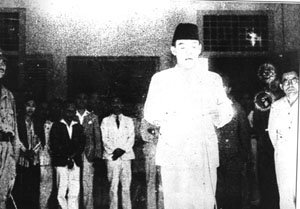
Pada tahun 1945, setelah 3,5 abad lebih mengorbankan darah dan jiwa, akhirnya bangsa Indonesia berhasil memproklamasikan kemerdekaannya dari belenggu penjajahan. Momen status quo (ketika Jepang menyerah kepada sekutu) dimanfaatkan secara manis oleh bapak-bapak proklamator kita.

Proklamasi Kemerdekaan Republik Indonesia

Setelah 61 tahun proklamasi kemerdekaan diserukan, sudahkah kita, bangsa Indonesia, benar-benar merdeka? Sudahkah kita benar-benar lepas dari penjajahan negara lain? Sudahkah kita merasa bebas dan nyaman melakukan apa yang kita yakini benar? Sudahkah kita memaknai dan menjiwai arti “merdeka” di dalam kehidupan kita sehari-hari? Mungkin kebanyakan dari kita akan menjawab dengan “belum”.

Walaupun saat ini kita tidak dijajah secara fisik oleh negara lain (seperti saat kita dijajah belanda dan jepang), sadar tidak sadar, banyak belenggu-belenggu lain yang mengekang kita, yang membuat kita tidak merdeka secara nyata, alias terjajah.

Satu bentuk keterjajahan di Indonesia yang sudah cukup parah adalah terjajahnya pola pikir. Yaitu ketika pola pikir kita membuat kita terbelenggu dan tidak bebas. Keterjajahan pola pikir ini terjadi akibat banyak hal, diantaranya oleh: lingkungan sekitar kita, keluarga, media, dan lain lain. Salah satu contoh nyata yang paling jelas dan destruktif adalah pola pikir yang membuat kita begitu tergantung kepada uang dan materi (materialisme). Uang dan materi menjadi parameter dan sistem nilai di dalam semua sektor hidup. Baik di dalam memilih pekerjaan, persiapan berumah tangga, memudahkan birokrasi, bahkan di dalam berbuat kebaikan sekalipun (semakin banyak uang yang dikeluarkan untuk tujuan kebaikan, semakin dihargai kebaikan tersebut). Pola pikir ini menjadikan ruang gerak kita terbatas hanya di dalam kerangka ke”uang”an. Pola pikir seperti ini pula yang menjadikan negara kita keropos oleh korupsi.

Merdeka secara nyata adalah ketika kita mampu menegakkan kebenaran yang kita yakini dengan sebaik-baiknya, tanpa ada perasaan takut atau tidak nyaman. Dan kemerdekaan seperti itu saat ini sulit dirasakan oleh kebanyakan rakyat kita yang masih dililit kesulitan. Satu cara untuk mendobrak belenggu penjajahan adalah dengan (meminjam istilah Ali shariati) melakukan hijrah. Hijrah dari keburukan kepada kebaikan, hijrah dari pemikiran kita yang lama ke pemikiran yang baru. Hijrah dari semangat yang keropos ke semangat yang baru. Dengan hijrah, kita bukan sekedar melarikan diri dari belenggu-belenggu yang mengekang kita, namun melakukan persiapan yang lebih mantap untuk kelak melawan belenggu-belenggu tersebut. Sama halnya seperti hijrah Rasul dari Mekkah ke Madinah. Beliau bukan sembarang melarikan diri, tetapi beliau membentuk fondasi yang kuat untuk melawan kelaliman. Proklamasi Kemerdekaan Indonesia mengandung makna yang kurang lebih sama.

Kembali lagi ke fenomena 17 Agustus. Yang dominan terjadi pada tanggal tersebut adalah pesta-pora, lomba-lomba dan bersenang-senang. Sebenarnya tidak ada yang salah dengan meluapkan kegembiraan, asalkan tahu betul sebabnya. Sayangnya, introspeksi akan makna yang ada dibalik proklamasi kemerdekaan itu sendiri menjadi sisi yang kurang populer. Jika pola pikir semacam ini dibiarkan berlanjut, semakin lama hari kemerdekaan akan semakin menjadi sekedar rutinitas belaka yang maknanya semakin terlupakan. Oleh karena itu, menyambut ulang tahun kemerdekaan Indonesia yang ke-61 ini, mari kita kembali hijrah dan membangun semangat baru untuk berbuat yang terbaik bagi bangsa pada umumnya, dan diri kita pada khususnya.

Hancurkan belenggu-belenggu zaman yang melumpuhkan kita!!!

MERDEKA!!!